
- difficulties; misfortune.
“resilience in the face of adversity”
Today’s blog is a summary of the first masterclass I took with DTS and focuses on improving our ability to handle adversity, which I consider an absolutely crucial skill.
The first thing we have to do is acknowledge that adversity is normal – bad things are going to happen in your life and it’s completely unavoidable. If you expect the best case scenario all the time you will constantly be disappointed.
We opened the class by listing things in the last year we’ve had to deal with: death of a family member, loss of a job, sickness, break ups, and a pandemic. We then looked at why when these things happen, some people get through them okay and can turn them into an opportunity for something better while others fall apart. General consensus came down to how prepared we were for these situations – keeping in mind we can only prepare so much for the unexpected base on our circumstances (for example someone with generational wealth will have an undeniable advantage over someone who just graduated with student debt and no steady job). The biggest piece to being prepared for any of the uncertainty was having some sort of financial plan in place to allow you to have the space to deal with these issues when they come up. When you’re living paycheck to paycheck, if you or someone in your family gets sick you do not have the financial freedom to take the proper time off to deal with it. We’ve all experienced going to work being very unwell but not being able to afford to take even a day off to stay home and rest. If you lose your job you might have to take the next immediate thing that comes up versus being able to take the time to find something you enjoy.
My challenge for you is to sit down and put some sort of financial plan in place. It could be as easy as making a monthly budget – do you know how much money you have coming in every month? Do you know how much your expenses are? Can you tell me right now how many subscription services you pay for each month – are you using them? (Did you realize your free trial of Disney+ is over now and has been charging you $17 a month?) Do you check your credit card statement for charges that shouldn’t be there? And do you know at the end of the month if you had more money come in than went out? If you don’t know the answers to these questions it’s very difficult not to panic when the check engine light comes on at the end of the month. If you don’t have a budget or some way of tracking this, this could be your first step in reducing anxiety around finances. Once that is in place you can make a plan for how to save for emergencies, for the future, etc.
PERSONAL NOTE: Finances can be very overwhelming. When you sit down to make your list of essentials (housing, food, car insurance and gas, utilities, etc.) make sure they are things YOU want and need. Look at your life, your income, and what living within YOUR means looks like to YOU. If I try to make a budget that includes paying for a home and saving up for a cottage, I’m going to fail. I have chosen to be a personal trainer with a 5-figure income who can take days off when I need, nap during the day, be at home with my dog, and play video games at night with my friends. That means I will not have a cottage, a boat, travel all the time, or wear expensive clothes and drive a sports car. I am more than happy with that decision, because I get more pleasure from helping people and living a healthy life style than I do from owning expensive things. If you want to have that 6- or 7-figure income, your budget is going to look very different from mine, and you will have different pros and cons. As long as you are okay with those pros and cons, then that works for you. (That being said if anyone wants to gift me a cottage or sports car, I will happily accept :P) Neither lifestyle is objectively better than the other – the best lifestyle for you is the one that makes you happy.
So, DTS came up with this little A-TACC Process to deal with adversity, because a lot of the time when these things happen we feel a loss of control, fear, anxiety, and get overwhelmed. Having a plan in place will help you take back control of the situation.
The steps are:
- BEFORE IT HAPPENS: Acknowledge and plan for adversity
- WHEN IT HAPPENS: Transform your personal narrative; what is the opportunity to transform (current situation) into (desired situation)?
- ACT to make your narrative a reality; what is the MOST impactful action I can take?
- COMMIT; find the courage to commit to take said action right away
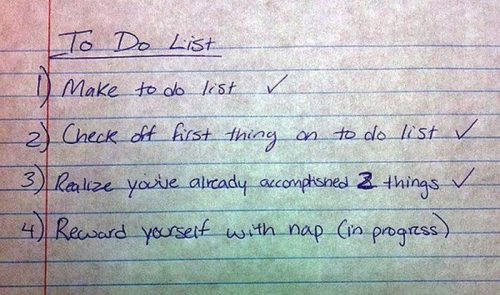
The main takeaways for me were making sure we are focusing our time/energy/money on the MOST IMPACTFUL actions, and committing to taking action right away. We spend an insane amount of time letting ourselves be distracted – saying yes to things we don’t have time for, finishing tasks that are unimportant/not urgent versus prioritizing those that are important/urgent. If you know that to be successful on your meal plan this week you need to grocery shop on Sunday, but instead of grocery shopping you decide to clean out the garage that really doesn’t have to be done for another month, you’ve not made the most impactful decision. For committing to taking action right away we talked about making lists. Who here has made a list before? Who has spent more time making lists than it actually takes to complete the tasks you’ve put on the lists? Or, who made a list of things that need to get done, patted themselves on the back for making the list, and then never used the list to actually complete any of those tasks?! I definitely have been guilty of all of those things on multiple occasions. A list does nothing just sitting there.
So! Take all of this with a grain of salt, but I really wanted to share and hopefully something hits home for you and helps with taking some control back over your life when things get rough. Just remember, adversity happens, it’s normal, you are not a bad person or failed in some way because something bad happened to you. Plan for what you can, and mentally prepare for what you can’t so that you are in the best position possible to handle things when they go wrong.

