
Today’s topic is a quick summary from my DTS Masterclass on Core Stability and their system on making core training accessible. I wasn’t sure if I was going to share it as it’s more for trainers and how to program core, but a lot of you are going back to the gym and group classes so there’s no reason why you shouldn’t or couldn’t learn this stuff for yourselves. What specifically comes to mind is when faced with a core exercise in a class that causes low back pain that you might need to modify but don’t know what to do instead.
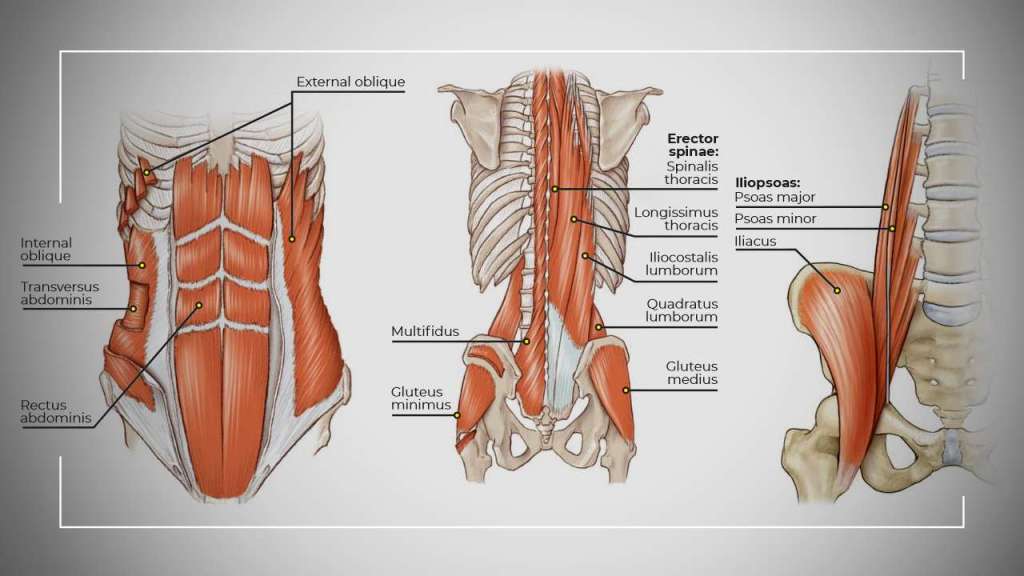
The basis of strength, stability, explosive power, and almost anything you can think of related to fitness is built upon a functional core. Without it, we are much more susceptible to injury, loss of power, and working at a much lower capacity than we could be capable of. There’s tons of different images or descriptions about what makes up the “core”, but I personally like the larger group of muscles like this one that also includes the muscles in your spine, hip flexors and glutes – because when you hear, “brace your core” it don’t just mean squeeze your abs (rectus abdominis). To be braced means fully engaged muscles all around the trunk with active glutes generating spinal stability from top to bottom. Here’s a quick image of what your “core” consists of:
So next, how do we train core? How do I modify things? How do I know what to change, and why, and when? I quickly googled “Core workouts” and these were two of the first ones that came up:
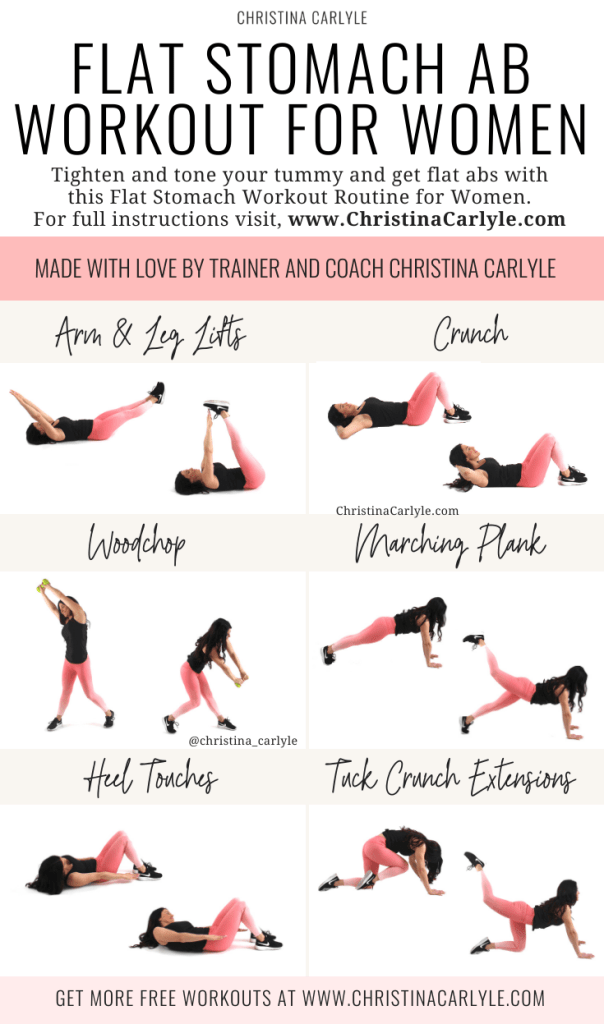
Which one do you choose? Are either of them right for you? Is one better? Are they both good? ……… (insert Jeopardy music) …….. and the answer is …… it depends! Just like when we progress exercises like moving from a bodyweight squat, to a Goblet squat, up to a barbell squat, we need to do the same with our core. DTS calls it “climbing the pyramid”, making sure we pass the prerequisite at each level before increasing demand on our bodies. Let’s take a look at the 5 levels of the pyramid, with the focus being 1-3:
1. Stability – the ability to control; controlling the joint, and in relation to “core” its controlling spinal motion; note: people with low back pain usually actually have very strong backs, and get pain from driving movement through the spine when we want it to move through the hips
2. Endurance – the ability to maintain stability for an extended amount of time
3. Resist Rotation – We move our spines when our endurance fails; people get hurt when a load shifts on them unexpectedly
4. Assist – adding in movements that assist with more complex movements
5. Timing/expression of power (F*V) – Loose then tense to generate power; knowing how to control the body and go from relaxed to braced
Let’s take a look at a common core exercise like a mountain climber. For your set up, 1 is Stability, can you hold a regular plank? 2, Endurance, can you hold that plank for the amount of time you need to do the mountain climbers? 3, can you add the movements while maintaining 1 & 2? If you notice mountain climbers for 45 seconds trigger your back pain, try something like this: First, can you hold a proper plank? If not, that is your modification, and work on mastering that. Second, improving the endurance – if we need to do climbers for 45 seconds, we need to be able to do a plank for at least that same amount of time – work up to a minute plank. Third, resisting rotation – when you start to move your legs, do your hips rock side to side? If so, this creates shear force on the spine which can trigger low back pain – the next modifier could be plank shoulder taps. Once we’ve mastered or improved in that sequence we are in a MUCH stronger position to do the mountain climbers.
Focus on mastering the basics (as boring as they might look) and identifying where along the pyramid you fall off. The basics are not basic because they are “easy”, but because they are the foundation of everything that would come after them.
 fitbusiness.ca