2022 Mindset Check

2021 was another trying year for a lot of us, but there were a few tactics I employed over the last 12 months to help keep me focused and moving forward towards my goals – whether financial, health and fitness, or personal. I wanted to summarize them below and hopefully you find one or two that might ring true and can use them in 2022!

1. Choose your top priorities and become obsessed with them. At the start of 2021 my goals were made very simple – figure out how to get by. I was in a brand new city with no job prospects and an empty house I couldn’t afford. While it was mildly terrifying it was equally refreshing. I wasn’t bogged down with social requirements, over-working, or binging the news and freaking out over politics. It was “Sam, you have no income and your electric bill is due – you need to find $67.98 today to pay this bill”. I woke up with clarity every morning knowing exactly what I needed to do for the day, running through my mental checklist: do you have shelter? food? clothing? does the dog have shelter, food, and his requirements? and that became my entire focus. If I had those things covered for the next 24 hours I was good, and then the rest of the day revolved around making sure I had the next 24 hours covered as well. While I hope your situation isn’t nearly as interesting, try to bring some clarity to your day – what things truly matter to you and deserve your attention, and what is bogging you down?

 2. Don’t get distracted. It’s rare to be of one mind, and to be truly focused on something and not have outside influences stealing our time, energy, and money for their own benefit. Facebook makes their money when you’re scrolling for an hour reading clickbait instead of relaxing in a hot bath. Big corporations make their money by convincing you to buy things you don’t need or even really want. If one of your priorities from above is to save money for a vacation, then you can’t let an UberEats ad sway you to buy a lukewarm burger and kind of soggy fries that is not worth $30. Or, if your goal is to eat healthier, then you owe it to yourself to tell your coworkers thank you for the gift but you won’t be taking home a full tin of cookies. Saying yes to things that not inline with your goals will slow down how fast you reach them, or prevent you from ever reaching them entirely.

3. Surround yourself with like-minded people, knowing sometimes that means being alone for a while. I strongly believe we are the product of the 5 people we spend the most time with. Make yourself a list of the 5 people you spend your time with – could be your partner, your parents, your kids, coworkers, friends, your dog, whoever. Do those 5 people have goals and values in line with yours? If not, those are conversations that might need to be had, or you might need to shake up who you spend your time with. If you’re trying to quit smoking, it’s easier to do that when no one around you is smoking versus hanging out with people who do. If your goal is to run more, it’s easier to do that when your friend also wants to run and you can do it together, versus them encouraging you to skip the run, order some UberEats and binge watch a show you aren’t really interested in. We don’t always have these people readily available in our lives, so sometimes that means spending a little more time alone to focus on your personal goals, and when you do you will attract others in more similar situations.

4. Choose habits and goals that are achievable and sustainable. Start small. When I started on rebuilding my business I would have overwhelmed myself by saying, “Okay, I need a website, I need 20 clients, I need a home gym, programs, etc. etc.” I started instead with a goal of 1-2 new clients a month, and committing to providing excellent service. I knew it would grow overtime and I would eventually get where I wanted to be. A few months later I got the website done, then the home gym started coming together, and piece by piece I made it happen with 1-2 goals each month to get me closer to where I wanted to be. 1 small step forward everyday will get you there faster than not starting the journey at all. If your goal is to start working out 5 times a week, start with 1-2, then add another, and another. If your goal is to save up for a house, put $20 a week away, and increase it when you can. It won’t seem like much at first, but things add up when you actively make them a focus.

5. Get things done before starting new projects. It’s super simple, finish tasks. What’s better, a list of 20 things you carry over week over week over week never finishing any of them, OR picking 1-2 things this week that are non-negotiable getting done? After 6 months you’ll have 10-20 things completed versus still pushing things off. And remember, make tasks actionable. Do not make your task “Find a Job” – what does that even mean? How do you do that? A better list would be “Update my resume”, “Apply to 3 positions a day”, “Go through my contacts and find anyone I know who might be a good contact/resource to talk to about a job”, etc. Same with your fitness goals, don’t make it “Eat healthier” – what does that mean? A better way to approach that would be, “Make a grocery list of healthier foods and buy groceries”, “Meal prep my troublesome meals for the week” (ie. you always miss breakfast and stop at Tim Hortons, prep your breakfast at night so it’s ready to go in the morning), “Find a replacement for my evening snack”, “Buy protein bars to have on hand”, etc. Then you get the dopamine hit for crossing things off the list, and they are actually helping you achieve your goals in those small, sustainable steps forward! And you may find a lot of your goals combine – if you are buying more groceries and spending less on eating out, that frees up more money to put towards saving for your trip or down payment.

6. (Training Specific) Understand training is cumulative and results are consistency based. Try not to stretch programs as that is not how they were designed. A 4 week program designed for 5 workouts a week is designed for 5 workouts a week, not 2-3 workouts a week stretched over 8 weeks. If you are struggling to get workouts in, you either need to look at how you manage your time or find a different program that fits your life better. “Squat Everyday” is not a good program for you if you can’t go to the gym and barbell squat for 30-days straight. What’s going to be effective is what fits your lifestyle. If I know you can only train 2 times a week, that program is going to look very different than if you workout 5 times a week. But if you take 2 and a half weeks to finish 1 week of a 5 day program, it’s not going to work the way it’s supposed to. Its much better to 100% complete a 3 day a week program and feel good about it, than 60% complete a 5 day program and not get what you wanted out of it. 

7. Enjoy. Celebrate. Pat yourself on the back and know that we’re all doing our best and our best IS good enough. 

Understanding CORE Training

Today’s topic is a quick summary from my DTS Masterclass on Core Stability and their system on making core training accessible. I wasn’t sure if I was going to share it as it’s more for trainers and how to program core, but a lot of you are going back to the gym and group classes so there’s no reason why you shouldn’t or couldn’t learn this stuff for yourselves. What specifically comes to mind is when faced with a core exercise in a class that causes low back pain that you might need to modify but don’t know what to do instead.

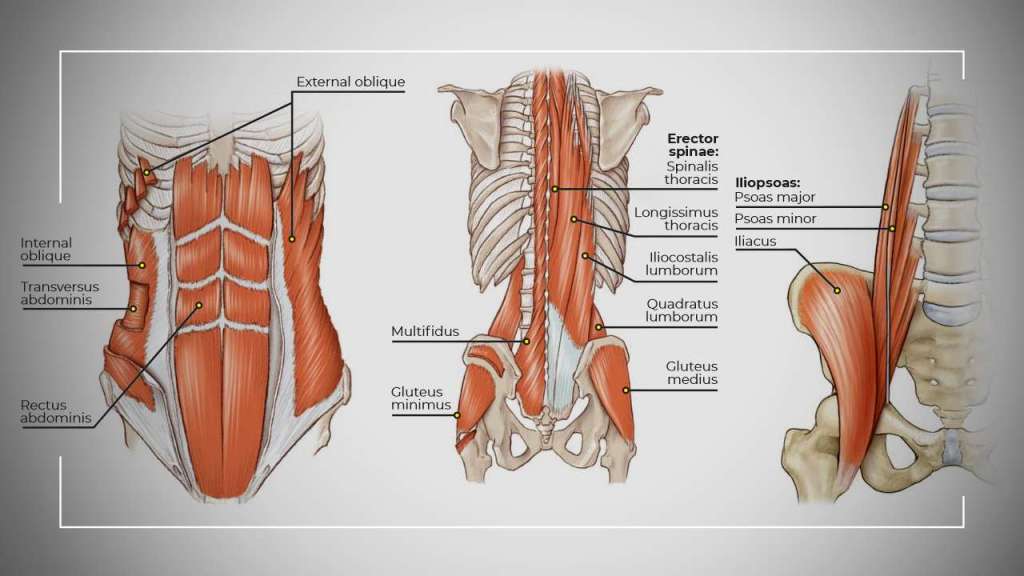
The basis of strength, stability, explosive power, and almost anything you can think of related to fitness is built upon a functional core. Without it, we are much more susceptible to injury, loss of power, and working at a much lower capacity than we could be capable of. There’s tons of different images or descriptions about what makes up the “core”, but I personally like the larger group of muscles like this one that also includes the muscles in your spine, hip flexors and glutes – because when you hear, “brace your core” it don’t just mean squeeze your abs (rectus abdominis). To be braced means fully engaged muscles all around the trunk with active glutes generating spinal stability from top to bottom. Here’s a quick image of what your “core” consists of: 

https://fitpage.in/core-muscles-and-how-to-strengthen-them/

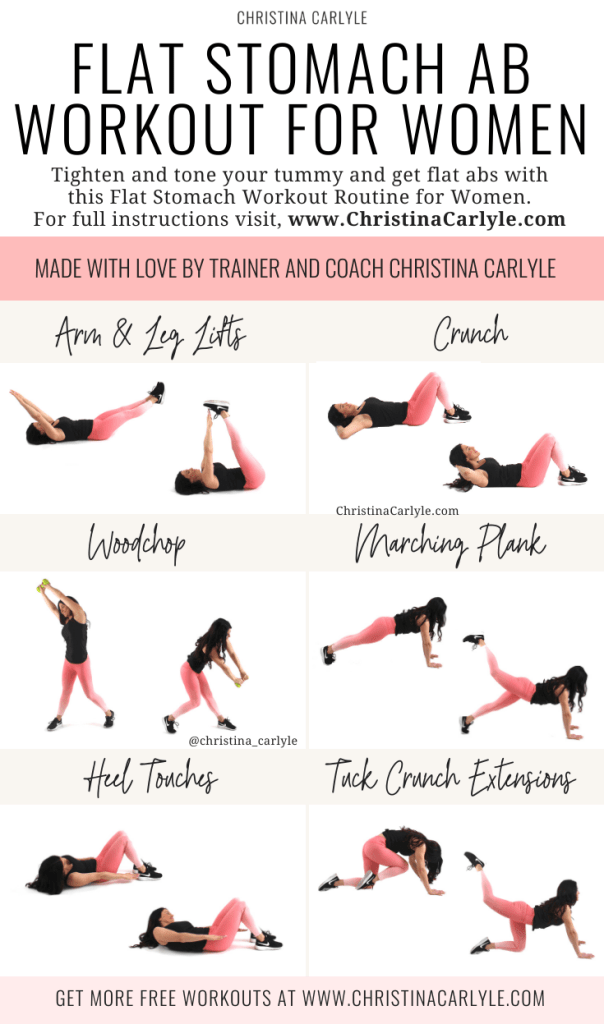
So next, how do we train core? How do I modify things? How do I know what to change, and why, and when? I quickly googled “Core workouts” and these were two of the first ones that came up: 

https://www.christinacarlyle.com/flat-stomach-ab-workout/

06da1b6c-82d2-459f-bd63-ed70017832dd.jpg

Which one do you choose? Are either of them right for you? Is one better? Are they both good? ……… (insert Jeopardy music) …….. and the answer is …… it depends! Just like when we progress exercises like moving from a bodyweight squat, to a Goblet squat, up to a barbell squat, we need to do the same with our core. DTS calls it “climbing the pyramid”, making sure we pass the prerequisite at each level before increasing demand on our bodies. Let’s take a look at the 5 levels of the pyramid, with the focus being 1-3: 

1. Stability – the ability to control; controlling the joint, and in relation to “core” its controlling spinal motion; note: people with low back pain usually actually have very strong backs, and get pain from driving movement through the spine when we want it to move through the hips 
2. Endurance – the ability to maintain stability for an extended amount of time
3. Resist Rotation – We move our spines when our endurance fails; people get hurt when a load shifts on them unexpectedly 
4. Assist – adding in movements that assist with more complex movements
5. Timing/expression of power (F*V) – Loose then tense to generate power; knowing how to control the body and go from relaxed to braced

Let’s take a look at a common core exercise like a mountain climber. For your set up, 1 is Stability, can you hold a regular plank? 2, Endurance, can you hold that plank for the amount of time you need to do the mountain climbers? 3, can you add the movements while maintaining 1 & 2? If you notice mountain climbers for 45 seconds trigger your back pain, try something like this: First, can you hold a proper plank? If not, that is your modification, and work on mastering that. Second, improving the endurance – if we need to do climbers for 45 seconds, we need to be able to do a plank for at least that same amount of time – work up to a minute plank. Third, resisting rotation – when you start to move your legs, do your hips rock side to side? If so, this creates shear force on the spine which can trigger low back pain – the next modifier could be plank shoulder taps. Once we’ve mastered or improved in that sequence we are in a MUCH stronger position to do the mountain climbers. 

Focus on mastering the basics (as boring as they might look) and identifying where along the pyramid you fall off. The basics are not basic because they are “easy”, but because they are the foundation of everything that would come after them. 

Overcoming Adversity

ad·ver·si·ty
/ədˈvərsədē/ noun

  1. difficulties; misfortune.
    “resilience in the face of adversity”

Today’s blog is a summary of the first masterclass I took with DTS and focuses on improving our ability to handle adversity, which I consider an absolutely crucial skill.

The first thing we have to do is acknowledge that adversity is normal – bad things are going to happen in your life and it’s completely unavoidable. If you expect the best case scenario all the time you will constantly be disappointed.

We opened the class by listing things in the last year we’ve had to deal with: death of a family member, loss of a job, sickness, break ups, and a pandemic. We then looked at why when these things happen, some people get through them okay and can turn them into an opportunity for something better while others fall apart. General consensus came down to how prepared we were for these situations – keeping in mind we can only prepare so much for the unexpected base on our circumstances (for example someone with generational wealth will have an undeniable advantage over someone who just graduated with student debt and no steady job). The biggest piece to being prepared for any of the uncertainty was having some sort of financial plan in place to allow you to have the space to deal with these issues when they come up. When you’re living paycheck to paycheck, if you or someone in your family gets sick you do not have the financial freedom to take the proper time off to deal with it. We’ve all experienced going to work being very unwell but not being able to afford to take even a day off to stay home and rest. If you lose your job you might have to take the next immediate thing that comes up versus being able to take the time to find something you enjoy. 

My challenge for you is to sit down and put some sort of financial plan in place. It could be as easy as making a monthly budget – do you know how much money you have coming in every month? Do you know how much your expenses are? Can you tell me right now how many subscription services you pay for each month – are you using them? (Did you realize your free trial of Disney+ is over now and has been charging you $17 a month?) Do you check your credit card statement for charges that shouldn’t be there? And do you know at the end of the month if you had more money come in than went out? If you don’t know the answers to these questions it’s very difficult not to panic when the check engine light comes on at the end of the month. If you don’t have a budget or some way of tracking this, this could be your first step in reducing anxiety around finances. Once that is in place you can make a plan for how to save for emergencies, for the future, etc.

PERSONAL NOTE: Finances can be very overwhelming. When you sit down to make your list of essentials (housing, food, car insurance and gas, utilities, etc.) make sure they are things YOU want and need. Look at your life, your income, and what living within YOUR means looks like to YOU. If I try to make a budget that includes paying for a home and saving up for a cottage, I’m going to fail. I have chosen to be a personal trainer with a 5-figure income who can take days off when I need, nap during the day, be at home with my dog, and play video games at night with my friends. That means I will not have a cottage, a boat, travel all the time, or wear expensive clothes and drive a sports car. I am more than happy with that decision, because I get more pleasure from helping people and living a healthy life style than I do from owning expensive things. If you want to have that 6- or 7-figure income, your budget is going to look very different from mine, and you will have different pros and cons. As long as you are okay with those pros and cons, then that works for you. (That being said if anyone wants to gift me a cottage or sports car, I will happily accept :P) Neither lifestyle is objectively better than the other – the best lifestyle for you is the one that makes you happy.

So, DTS came up with this little A-TACC Process to deal with adversity, because a lot of the time when these things happen we feel a loss of control, fear, anxiety, and get overwhelmed. Having a plan in place will help you take back control of the situation.

The steps are:

  1. BEFORE IT HAPPENS: Acknowledge and plan for adversity
  2. WHEN IT HAPPENS: Transform your personal narrative; what is the opportunity to transform (current situation) into (desired situation)?
  3. ACT to make your narrative a reality; what is the MOST impactful action I can take?
  4. COMMIT; find the courage to commit to take said action right away

The main takeaways for me were making sure we are focusing our time/energy/money on the MOST IMPACTFUL actions, and committing to taking action right away. We spend an insane amount of time letting ourselves be distracted – saying yes to things we don’t have time for, finishing tasks that are unimportant/not urgent versus prioritizing those that are important/urgent. If you know that to be successful on your meal plan this week you need to grocery shop on Sunday, but instead of grocery shopping you decide to clean out the garage that really doesn’t have to be done for another month, you’ve not made the most impactful decision. For committing to taking action right away we talked about making lists. Who here has made a list before? Who has spent more time making lists than it actually takes to complete the tasks you’ve put on the lists? Or, who made a list of things that need to get done, patted themselves on the back for making the list, and then never used the list to actually complete any of those tasks?! I definitely have been guilty of all of those things on multiple occasions. A list does nothing just sitting there. 

So! Take all of this with a grain of salt, but I really wanted to share and hopefully something hits home for you and helps with taking some control back over your life when things get rough. Just remember, adversity happens, it’s normal, you are not a bad person or failed in some way because something bad happened to you. Plan for what you can, and mentally prepare for what you can’t so that you are in the best position possible to handle things when they go wrong.

Why is Cardio Important?

I’ve signed up for monthly masterclasses through Darby Training Systems and just had my second one this past Wednesday. This month’s topic was Cardiorespiratory Fitness (CRF) and HIIT training and I wanted to share the parts that jumped out at me the most in a nice summarized blog entry:

1) Why is Cardio Important? The top 4 leading causes of death worldwide are all related to cardiorespiratory fitness (heart disease, stroke, COPD, and lower respiratory infections), and cardiorespiratory fitness is the number 1 indicator on how long you will live. Even if you are one of my strength clients, or only interested in bodybuilding, I still program in cardio a couple times a week because I care about you guys as a whole – I’d rather you be a little grumpy at me for asking you to go for a run when all you want to do is squat 😛 It’s also why I don’t get upset if you didn’t have a chance to get a lift in, but you went for a bike ride instead. As much as I care about your specific goals, your overall health is my top priority

Leading Causes of Death.jpg

2) “Fit” versus Bigger Bodied? We want to recognize that people live in different sized bodies, and the fitness industry has perpetuated smaller=fitter/more healthy. This isn’t the case. Someone with a larger body but better CRF is healthier and most likely going to live longer than someone who is smaller with poorer cardio. The science says, no matter what the size of your body is, improvements in your CRF will reduce all-cause mortality. This is another reason why I don’t talk to you guys about your weight, BMI, and things like that unless it is something you’ve brought up as a goal and is important to you. I just weighed myself at 149.8lbs and it’s false to say I am less healthy than when I was at 110lbs simply because I’m 40lbs heavier. Now that’s not to say that if you feel you are overweight and you want to lose weight that that won’t make a difference, as it is definitely easier on your joints and body systems to be within a certain weight range for your height and age. The main point here is smaller doesn’t equal fitter by default. 

3) How can we see if we’re improving? DTS likes to use World Fitness Level which uses a quick survey to give you your current age and what your metabolic age is. It’s a really good indicator of where we are starting at, and then retesting down the road to see if we are improving. It only takes 2 minutes to fill out, and I gave it a try. I was very happy to see that my Vo2 max and metabolic age are statistically better than the average for people 32 years old. The second picture indicated Heart Rate Recovery (HRR) as a great tool for tracking improvements. I’ve talked to a few of you guys before about your heart rates – it’s not how high it goes during a workout or how low it stays when you exercise, but how quickly it comes back down. What you want to be looking at after cardio is laying down on your back and seeing how quickly your heart rate returns to a resting/recovery state. If you’ve been laying down for 1-2 minutes and it’s still high or not coming down, this is a problem. If your heart rate shoots up to 180bpm on the bike but when you jump off and lay down it drops back down to 80bpm, THAT’s what we’re looking for – the ability for your body to output when it needs to, and return to a relaxed state afterwards

Screenshot 2021-10-13 102053.jpg
Heart Rate Recovery.jpg

4) Things you can do to improve your CRF? Getting in at least 15-20 minutes a day of higher intensity training is key. This could be a bike ride, a cardio class, a metcon, or simply running up and down the stairs 10 times at home. Watching your favourite show, start doing jumping jacks on a commercial break and do them until the next commercial break – that’s about 9-11 minutes right there depending on the show! There are so many ways to get it in, and it’s so important. If you have a podcast you love to listen to, or are relaxing to an audio book, listen to it and relax while going for a little jog, or bike ride, or walking up and down the stairs for a chapter. I PROMISE you, you will feel better after doing it and knowing that such a small time commitment can make such a difference in the long run. 

I hope this was helpful! 

Sincerely,
Sam 

The Motivation Dilemma and Energy Debt

“Why do some people always get their workouts in no matter what?”
“Is something wrong with me because I don’t want to exercise?”
“How come some days I just can’t find the motivation?”

I get these types of questions a LOT so I thought I’d give my personal insight.

Optional Back Story: We’ve all been taught that not being “productive” is a bad thing. If we are not tasking, practicing something, working over time or taking extra classes in school, we are falling behind. Anyone who’s ever worked retail or a minimum wage job knows full well “if you can lean, you can clean”. This has some long lasting impacts on how we structure our days and weeks as we go through childhood to adulthood. When you were in elementary school you probably had homework, house chores, and some sort of sport or extracurricular activity. When you got to high school your load increased needing top grades to get into a good post-secondary. You then got into university or college or went straight into the workforce. I took my first “stress-leave” when I was 22 juggling my 4th year of university, working a full-time management position, getting married, and buying a condo. I looked at my calendar and noticed I didn’t have a day off for 77 days straight. This sounds INSANE to me now, but at the time no one at school or work or in my family saw any problem with it. That’s just what you have to do to get ahead (and I’d better get used to it because that’s what the next 50 years would look like). I was at my peak level of being unhealthy. I was overweight, sick, tired, stressed, was sleeping about 4 hours a night (I’d get home from school at 10:00 PM and was up at 3:15 AM for work), and was deeply unhappy. I knew I needed to change something when my boss had a heart attack and passed away at the age of 34. I decided then I was done playing the game of who can burn themselves out the fastest (ps. my “stress leave” was a whopping 2 days).
 
Next lets look at energy debt. Imagine your energy as money. If you are healthy, rested and at 100% $10 gets deposited into your account for the day. There are things in your day that cost money: 

Work $5 (regular hours)
Home-Work $2 (answering emails or things after your supposed work hours)
Home-Life $1 (making dinner, laundry, etc.)
Dependents $2 (obligations related to kids or pets)
Social Functions $1
Exercise $1
Entertainment $1 (watching Netflix, reading a book, etc.) 

Right off the bat we can see that $10 isn’t a lot. For example after work, working past our hours, and looking after dependents, we’re already at $9 for the day, and that’s probably 5 days a week. That only leaves $1 a day Monday to Friday to spend on exercise, a Netflix show, or a social function. Because we’ve been programmed to do it all and stretch past our capacities we ignore the cost. Monday, we work and work past our hours, then pay for home life and our dependents and by 7:00PM we’ve already spent $11. We get mad at we didn’t get to workout, or watch our show, but we can bump that to tomorrow right? Right, just do Monday’s workout on Tuesday. You go to sleep, but it’s not a restful sleep. We don’t wake up at 100% but 90% today. Uh oh, that means we’re starting Tuesday with only $9, AND we overspent by $1 yesterday – today we only have $8. But, you still have to work and look after your kids and yourself and know you have a late meeting today and that’s $9 on it’s own. You can’t pay for the cost of today, let alone the workout from yesterday and the one you’re supposed to do today. We get more and more in debt everyday, BUT it’s okay because we have a weekend coming up, right? Saturday and Sunday will be a fresh $20 bill we can catch up on. Well, we still have home-life ($4), and we agreed to 2 social functions ($2), and we have a bit of work to catch up on ($2) = that’s $8 already and we owe $16 from the week. You get the picture.
 
This is energy debt. We are constantly borrowing things from the next day and are never able to catch up. We need to start breaking the patterns of borrowing money – we have to stop spending what we don’t have. On Monday, you can afford to exercise AND watch Netflix but ONLY if you don’t spend those $2 on working into your evening after your supposed work hours are over.

This plays into motivation in some crucial ways.
1) There is nothing wrong with you if you’ve overspent and don’t have “motivation” to workout. If working out is important to you, then instead of trying to muster up the energy (borrowing from tomorrow), you need to work on managing your energy better – unfortunately this usually means putting a hard stop on work (no work after 5PM), turning down social engagements that take up too much of the weekend, and saying no to taking on extra projects at work. This is difficult because it generally means letting someone down – and you know what, that’s OKAY. 
2) Some people working out everyday are borrowing to do so. You know when you see that person on the street who always has the nice car, the nice clothes, the big house? What you might not know is that they have $500,000 of credit card debt and are on the verge of bankruptcy. A lot of “fit” people are on the verge of energy bankruptcy everyday – I’ve been there. I’d get my workouts done but then be so tired I’d start falling behind on work, house chores, and all my other responsibilities – this isn’t ideal either. 
3) Prioritize what’s important and spend on that! I know for me, the important things are my clients, looking after my house and my dog, exercise and relaxing at night with my partner – those add up to exactly $10. That means it’s also important I get a good night sleep every night so I wake up fresh with my $10 to cover it each day! And it also means I cannot afford to spend money on working past my work hours, or going to a social function that takes up a whole afternoon. When I’m asked if I want to do a fitness class at 7:00PM, the answer is always no and I don’t feel bad about it – it will mess up my sleep, put me in debt for tomorrow, and take away the time at night I spend relaxing. 
4) Buy 1 Get 1 Free! Some of these things you can double up to save some money! If you want coffee with a friend but need to exercise still and walk your dog, you go for a long walk with them and take your coffees with you, then you’ve completed $3 for only $1! Find the ways you can strategically plan your day to make the best of your time. 
5) Some days you’ll have unexpected expenses. There will be days that no matter how much you plan ahead, you get called into work, or your tire pops, you get sick, or a number of things happen. All we can do on these days is manage what we can and not make it worse by beating ourselves up about something out of our control. 

Take a look at your week, see what you want and need to get done, and cut out anything else.


Sincerely,
Sam